Hiring | October 18, 2026
How to Work With an Interior Designer: Your Half of the Project
By Neha Gupta, founder and principal designer, NU Curations, Seattle
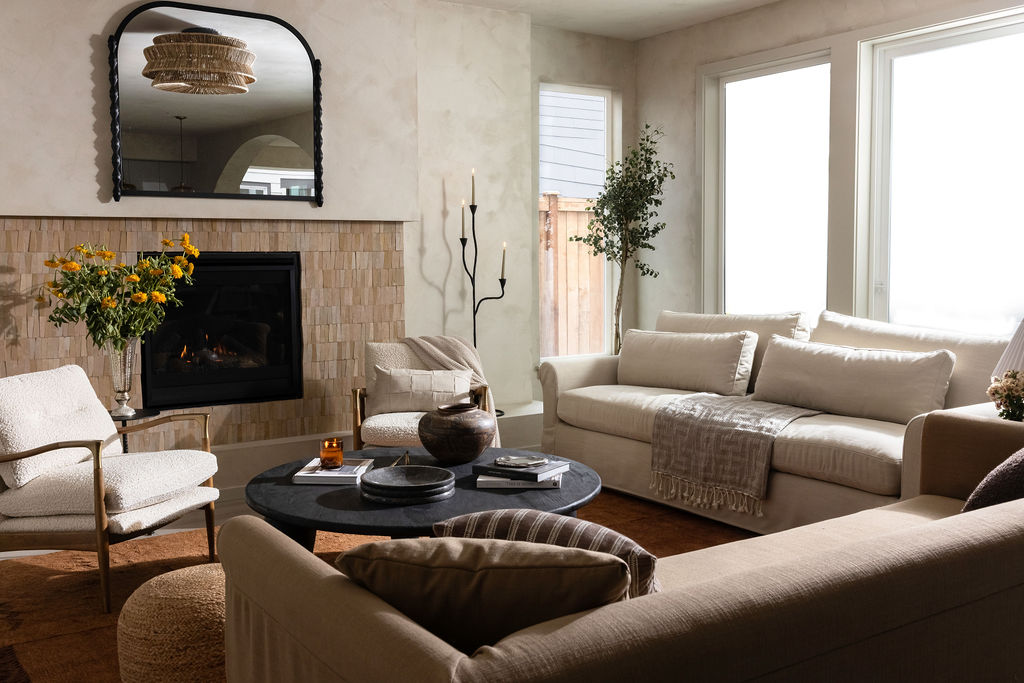
Most people spend their worry on choosing the right designer. The bigger variable is what happens in the weeks just after, because a designer has two skills and a portfolio only ever shows one of them. Anyone can assemble a room they themselves would like. The harder thing by far is assembling the room you did not know how to ask for, and that one depends almost entirely on what you tell them.
How do you work with an interior designer?
Working with an interior designer starts with choosing someone whose finished work you actually respond to, then telling them the truth about how you live, including the unglamorous parts. After that your job is reactions rather than solutions. Say what you like and dislike, and why. Approve the direction and the major selections, then let the studio carry the sequence.
Every portfolio has a hand, and you will be living inside it
A designer brings their own hand to your house. That hand is most of what you are paying for, and it will be visible in your rooms whether or not anyone names it. So the first test is not analytical. Look at the finished work and notice whether anything in it moves you. If nothing does, no amount of range will rescue the fit.
If something does, test the range next: ask, as our 12 questions guide suggests, about a project that looks nothing like the rest of the portfolio. Feel first, interview second.
Where your input is actually needed
We have told the phase-by-phase story in our full service post. Your half of it is narrower: four moments when the project is waiting on you.
- The moodboard: the cheapest place in the whole project to discover that you and your designer are not picturing the same home.
- The layouts, where the question is how you actually live, not what you like.
- The renderings. Approving one is the last moment a preference is free.
- Procurement, where your job shrinks to a prompt yes or no when something needs a decision, and to patience the rest of the time.
We propose two layouts, and we tell you which of the two we would choose. Two is deliberate. One plan is a verdict with no visible alternative, and four is homework. The difference between the two is the actual conversation, and the recommendation means you are never left to break a tie on your own. Two options put the trade-off on the table where you can see it.
Choose the plan that survives a Tuesday night, not the one that photographs best. Design runs two to eight weeks on our Seattle projects, and this is where that time is spent.
As for rhythm: you will hear from us at each of those four moments, starting with the first visit, a $200 working session where the scope gets defined. During procurement, silence is normal and means things are on schedule. A call from us in that stretch means a decision needs you, and those calls reward a quick answer.
Tell us the parts you would leave out of the tour
The facts people hold back are usually the ones that decide the plan, and they hold them back because they are faintly embarrassing: who eats standing at the counter, which room nobody has entered since the move, the dog who is on the sofa regardless of what anyone agreed, the collection that has never had a proper home.
None of that is a confession. It is the brief. At our Seattle Townhouse project, a compact footprint had to absorb a resident dog and a vinyl collection, and both of those facts did more to shape the plan than any style word could have. We loved that brief, frankly: constraints that specific are a gift, because they make the right answer findable.
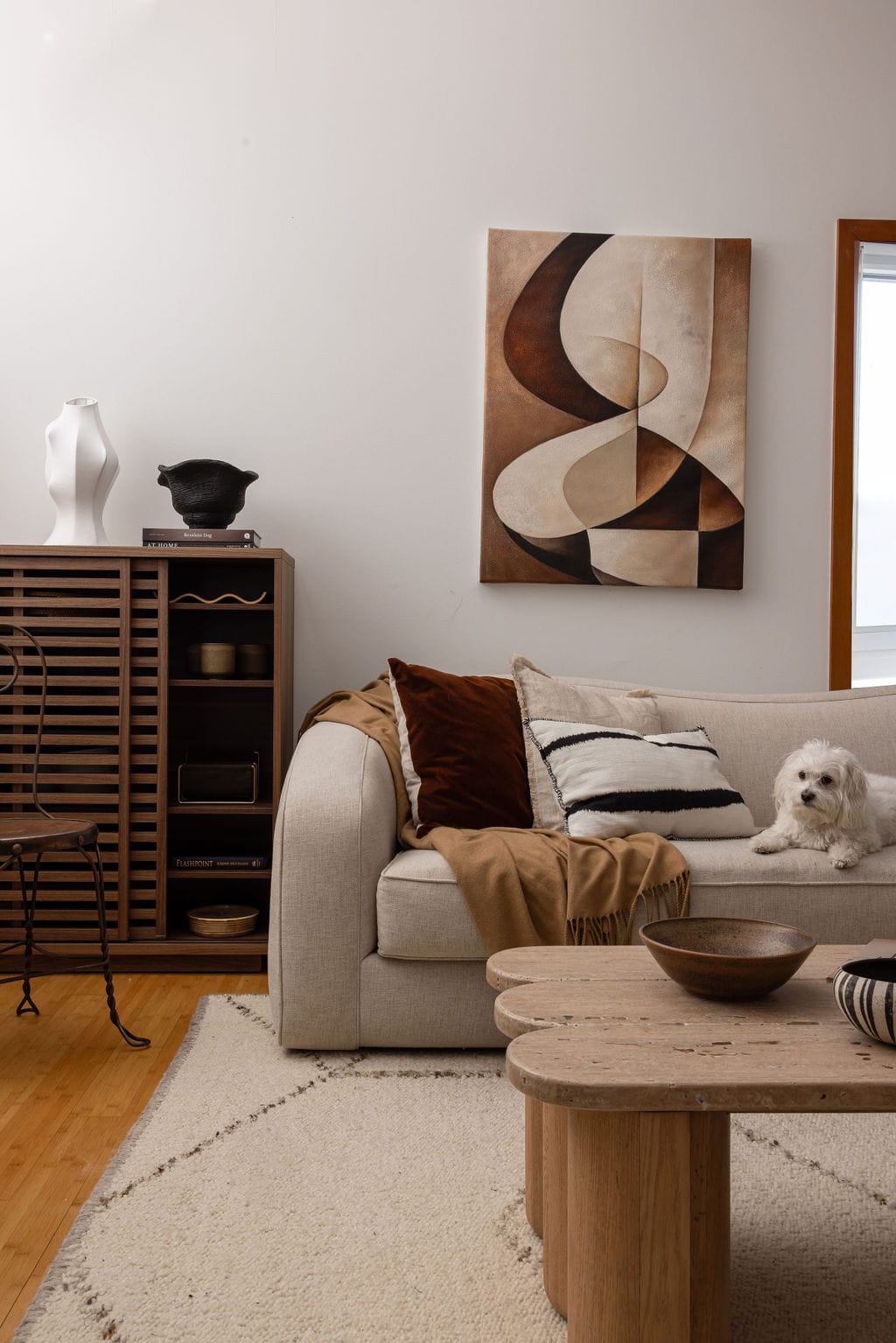
One client took several conversations before he could tell me that he loves color. He had absorbed somewhere along the way that liking color is a feminine trait, so it was not a thing he felt able to say out loud about his own house. It is not, of course. And no style questionnaire would have caught it, because he would have answered every question honestly and still left that out.
Getting to it changed the work. Once it had been said, I could design a home he would enjoy being himself in rather than the careful, safe one he was on course to ask for. That is the whole argument for being a little exposed with your designer: the thing you are slightly reluctant to admit is the thing the house should be built around.
The rendering is a promise about the room, not a photograph of it
Here is the expectation worth setting early, because almost nobody sets it. A rendering settles the layout, the proportions, the palette, the way light lands, and the reason every piece was chosen. All of that holds. What can move is a specific object, and rarely more than one at a time.
Approved in July, a sofa can be discontinued before the order goes in. That is nobody's doing, just a supply fact, and the ordering window of six to ten weeks or more is exactly the window in which inventory shifts underneath a plan. A few selections go this way on most projects and we absorb it quietly.
What happens next is the part that matters. That sofa was not chosen because it was pretty in the drawing. It was chosen for its scale, its seat depth, and the way a particular fabric behaves against north light. Those criteria are what the replacement gets measured against, which is why the finished room stays true to the rendering even when a piece in it is different. A room this size asks for an important sofa, and the next one has to be important in the same three ways.
The hard version is different, and it is worth describing because it is the one thing in this whole process that your pace controls. On one project the decisions took a long time to come back to us. By the time approvals landed, several pieces had gone out of stock at once, and losing several at once is not the same problem as losing one. A scheme is an ensemble rather than a list. Pull four things out of it simultaneously and the number of remaining combinations that still work together drops sharply, which means you are not replacing items any more. You are redesigning.
That cost us a lot of hours, and the hours are our problem, not yours. The part that is yours is worse. Those clients had already made their choices slowly and with real thought, and then had to make them again from a shorter list. I have heard the sentence "I liked that other one more" at the end of a redesign like that, and by then there is nothing to be done about it. Nothing replaces a decision you had already finished making.
So if you take one practical thing from this post: decide at the pace the project is moving. Not fast. Just not parked.
None of which changes the standard, and this is the part I will state flatly. We never swap something in because it happens to be available. Design and function lead every replacement exactly as they led the original choice, and nothing is ordered until you have seen the new option and are comfortable with it. A substitution reaches you as a decision, never as a surprise at installation.
The rendering is the argument, the room the verdict.
We can see the room before you can
By the time we present, the finished room already exists in my head. That is the skill you are hiring, and it is also why a presentation can feel like a leap. When you cannot picture it, do not say no. Say you cannot picture it, because that sentence has an answer: a sample in your hands, or the dimension taped out on the floor.
How to say you do not like something
React, do not redesign. Give the reaction and the reason at the level you actually feel it: the sofa feels cold, this reminds me of a hotel. One sentence of dislike and one sentence of why is almost always enough to redraw from.
What does not help is arriving with a replacement product link. A substitute is a solution, and a solution hides the problem it was solving, which leaves the designer guessing at what actually bothered you. A stated problem is nearly always solvable. A preference already converted into a purchase order is not.
The most useful sentence a client says? "I don't like it, and I think it's the color." It is the dislikes that move a design forward, not the likes, and the time to say them is at the presentation. After approval the same sentence becomes a change order. The contract carries one formal revision as a safeguard, but the measure we actually work to is simpler: we would rather redraw than hand over a home you have reservations about.
Sometimes the problem is larger than a piece, and it is worth knowing what that looks like. One client came to us wanting an upgrade without a settled sense of what they liked, and they handed us a style name to work from: Japandi. We designed to it. When the choices were in front of them, they found they did not like Japandi at all.
That is a genuinely hard place for a designer, and I will say plainly why. The first job is to know what the client wants, and when the client does not know yet, there is nothing solid to design against. A style name is a word people reach for before they have lived with the thing it describes, and it can carry a project a long way before anybody notices the gap.
What we did was stop. We gave them our read on the project, said that we wanted them to love the house rather than simply finish it, and gave them room to work out what they actually wanted. A pause costs weeks. Finishing a home nobody in it likes costs considerably more than that.
Most of the time a mismatch this size surfaces at the moodboard, which is the cheap place to find it and the reason a moodboard settles a direction but never a purchase. The Japandi project got past it. If it reaches you late, say so anyway. Late is still cheaper than never.
Hand over the controls, keep the authorship
These are two different things and conflating them is where projects go wrong. Authorship stays with you: your likes and dislikes, the truth about your life, the budget, and the approvals that shape the home. Control goes to the studio: the sequence, the sourcing, who gets called when something arrives damaged, the hundred things that get solved without a meeting.
A room designed by committee looks designed by committee. It always has.
Anything with a real cost or schedule consequence still comes to you, stated plainly, because that choice belongs to the person paying for it. What does not need to come to you is the logistics of carrying it out.
In practice this comes up less than people expect. Clients rarely want to take the sourcing back, and when they do want to own a part of it, that is simple to arrange. One client preferred to buy the appliances themselves, so we put them in touch with our vendor and they did exactly that. It is their house. Every decision outside the scope of the project belongs to them, and we are not precious about it.
So, plainly, what we do not do: we do not design by committee and we do not proceed on silence. And we will not promise you a specific object nine weeks out, only the criteria it was chosen against and a room that answers to them.
If you are close to hiring someone and wondering how much of yourself you are supposed to hand over, the answer is the awkward parts, not the decisions. Bring the things you would leave out of the tour.