Hiring | August 25, 2026
Is Hiring an Interior Designer Worth It? An Honest Look at Cost vs Value
By Neha Gupta, founder and principal designer, NU Curations, Seattle
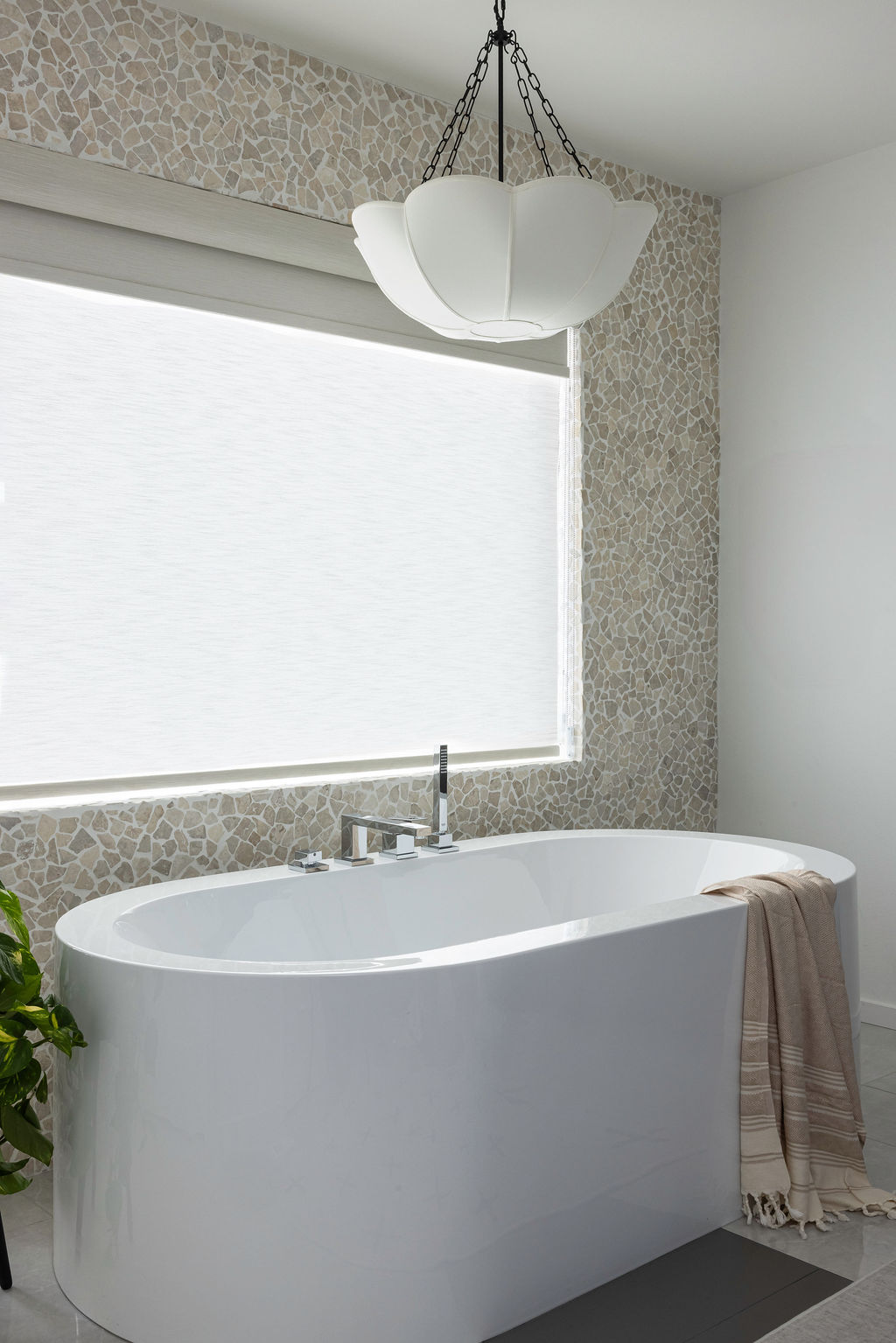
There are projects where I would tell you not to hire us. If you are adding a desk to a room that already works, buy the desk. The question deserves a proper answer though, because it changes completely depending on what you are about to do, and most of what is written about it online comes from people who sell design services and have never had a reason to say no.
Is hiring an interior designer worth it?
It depends on how many decisions your project contains and how expensive those decisions are to reverse. It is worth it when you are moving into a new house, refreshing a whole room, downsizing, or starting new construction. It is not worth it for a single addition to a room you already like. The fee buys sequence and judgment rather than decoration, and sequence only matters when there is enough to sequence.
The expensive part is deciding late
Most people picture design as the part where someone picks colors. The costly part is when the picking happens. If the design is not settled before construction starts, those decisions do not disappear. They move to the job site, where they get made in a hurry against whatever a supplier can deliver this week.
A vanity is not a faucet. A faucet you can choose on a Tuesday and install on a Thursday, because faucets sit in warehouses. A vanity can carry a lead time of six to ten weeks or more, and so can cabinetry, tile from a small maker, and anything built to order. The difference between them? Lead time. Decided at the job site, a bathroom becomes a list of what happens to be in stock, and the schedule starts making design decisions that should have been yours.
That is the cost nobody writes into the budget. Not a line item, but a slow substitution of intent for availability.
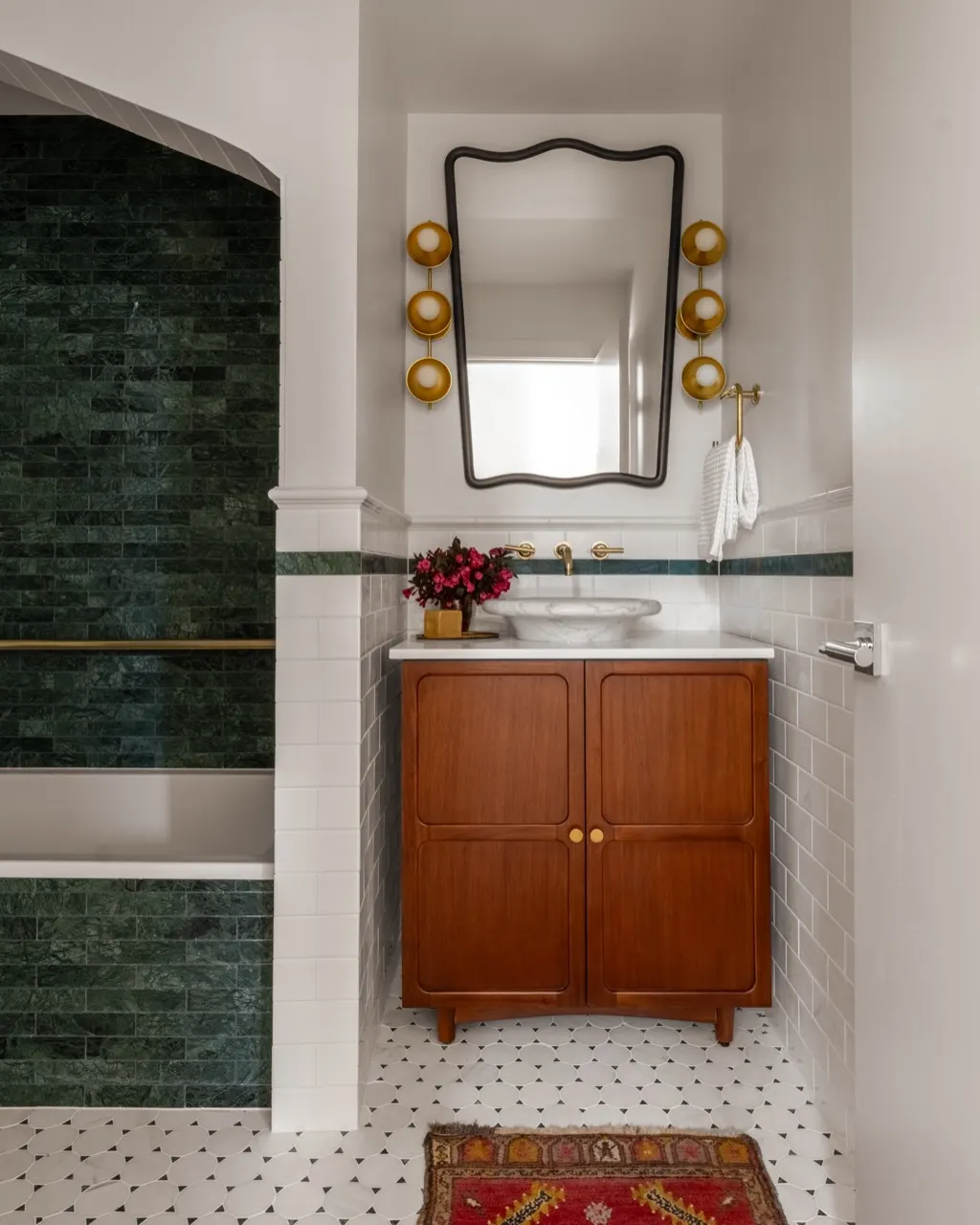
Even a fully settled design can slip. At our Queen Anne Crestside project, every tile selection for the bathroom work was made before anyone started. A small mistake in one of the renderings still sent the crew the wrong way, and the tile went up stacked in line instead of the offset subway pattern we had drawn. We had the finished wall demolished and reset correctly. Nobody enjoys that conversation, and it cost somebody real time and real effort. It was worth it, and the wall is right.
Sit with that for a second. Every selection had been made, every precaution taken, and one ambiguous drawing still cost a wall. Now picture the same bathroom with nothing chosen in advance, where the pattern and the tile itself get settled by whoever happens to be standing in the room that morning.
A designer earns the fee by sequencing carefully the decisions that cannot be undone later, and by catching the ones that go wrong anyway while they can still be fixed.
What the fee actually covers
The first visit is $200, and it is a working session rather than a sales call: we walk the space and define the scope, and you leave knowing what the project actually is. Design fees are quoted from that scope up front, before you sign anything. Furnishings-only work is priced by room, so a three room project is three room fees. Remodels are priced by the scope of the work. New construction is the one shape where the fee is usually calculated by square footage, because the scope follows the size of the house.
Project management is billed separately, and site visits beyond the agreed scope run $200 an hour. The money for the build itself goes to your contractor. That is the construction budget.
The four moments that justify a designer
- Moving into a new house, where every room is a decision at once and none of them have a precedent yet.
- Refreshing a whole space, a living room for instance, where the pieces have to work as a group rather than one at a time.
- Downsizing, where the hard part is deciding what earns its place and how smaller rooms have to work harder.
- Starting new construction, where design decisions get locked in by framing and rough-in long before anything looks like a room.
What is interesting is that the people who regret hiring a designer and the people who regret not hiring one are almost never describing the same kind of project. The regret runs one way for single purchases and the other way for whole rooms.
When it is not worth it
For me, the line is simple: one-off additions do not need a designer. An office table for a room you already like. A replacement lamp. Buy it, you will do fine, and honestly an AI tool is a good companion for exactly that kind of decision. It can show you a table in your room and answer the only question you have.
Those tools stop being useful where decisions start depending on each other, and on time. An app can show you a vanity. It cannot tell you that the one you like ships in nine weeks and your tile does not, or that the drain location has to be settled before the plumber's rough-in.
Ask how the trade-offs get decided
Most people choose a designer for their style, which makes sense, because style is the part you can see. What a portfolio cannot show you is how someone behaves under a deadline.
Some designers take the faster route when a project runs long, and take it quietly. Speed matters, and nobody wants a project that drags. But the choice between the quicker option and the better one belongs to the person paying for it, and a good designer puts it on the table: here is the trade-off in design, in quality, and in time, and here is what I would do. Then you decide, knowing what you traded.
Ask any designer you are interviewing what they did the last time a lead time wrecked a plan. That answer tells you more than the portfolio does.
One thing we do not do is construction. That is performed by your licensed general contractor, and we coordinate with them rather than stand in for them.
If you are somewhere between a desk and a whole house, the first conversation is the cheapest way to find out which one you have. Bring the rooms and bring your real number.